
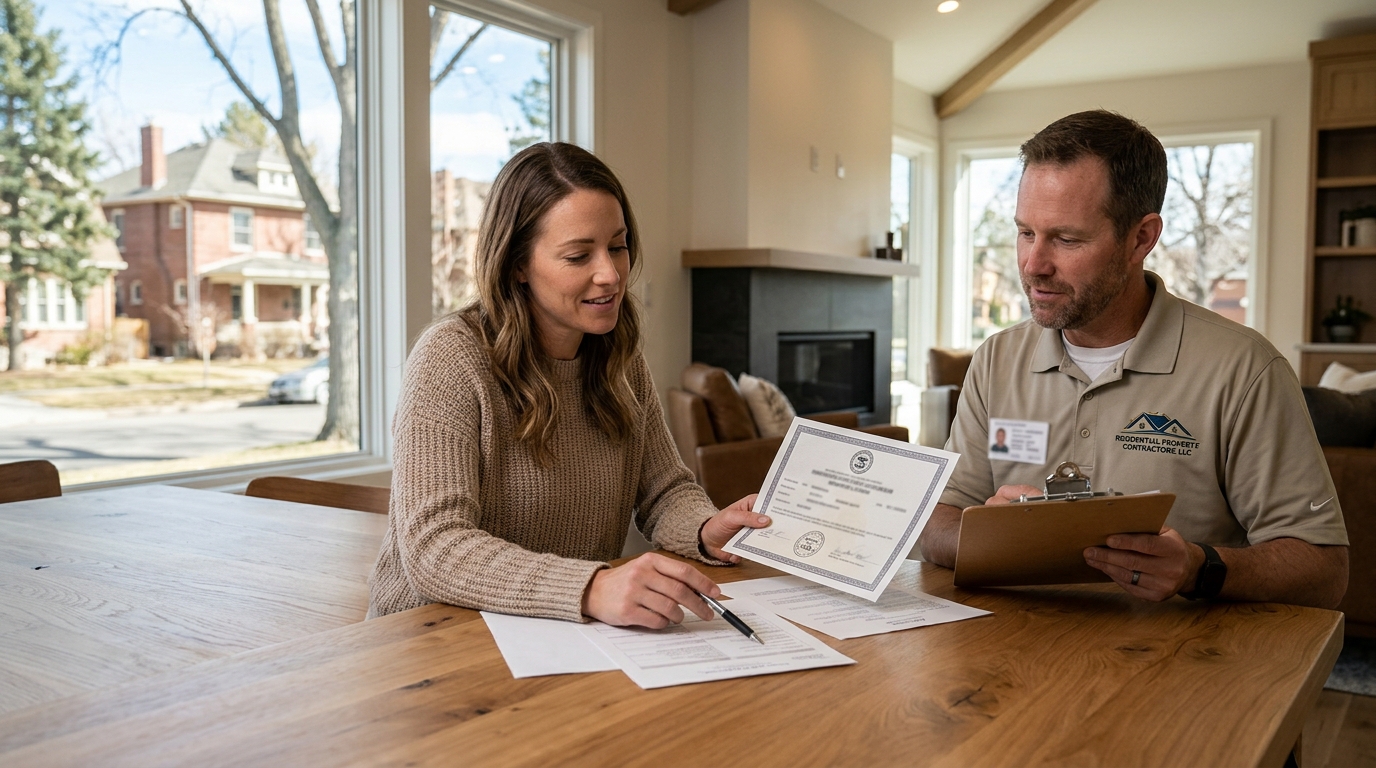
Before signing a contract for a home addition in Denver, you must verify the contractor holds a valid Colorado Class A or Class B license and carries adequate insurance. Residential Property Contractors, LLC operates as a fully licensed and insured firm, ensuring that every project meets state regulatory standards and protects your investment from the start.
Understanding Colorado Contractor Licensing
Colorado requires contractors to register with the Division of Professions and Occupations. A Colorado contractor license is a state-issued credential that verifies a business meets specific financial, legal, and competency requirements. For home additions, which often involve structural changes, a Class A license is typically required because it covers all types of construction work. Class B licenses are limited to residential work under a specific dollar threshold. Verifying this status is the first step in ensuring legal compliance and professional accountability. For additional details, review the About Residential Property Contractors.
Why License Class Matters
The distinction between license classes determines the scope of work a contractor can legally perform. If a contractor holds only a Class B license but is hired for a complex structural addition, they may be operating outside their permitted scope. This can lead to permit denials, failed inspections, or legal liabilities for the homeowner. Always confirm the license class matches the complexity of your project.
Checking License Status and History
You can verify a contractor's license status through the Colorado Division of Professions and Occupations online portal. This database provides the license number, expiration date, and any disciplinary actions or complaints on file. A clean record indicates a history of professional conduct. If a license is expired or suspended, do not proceed with the contract. This verification step takes less than five minutes and provides critical peace of mind.
Reviewing Disciplinary Records
Disciplinary actions can range from minor fines to license revocation. Reviewing these records helps you understand a contractor's track record with regulatory bodies. A pattern of complaints regarding billing disputes or poor workmanship is a significant red flag. Conversely, a contractor with no disciplinary history demonstrates a commitment to ethical business practices and quality work.

Verifying Insurance and Bonding
Licensing alone does not protect you from financial loss if an accident occurs on your property. General liability insurance is a policy that covers third-party claims for bodily injury or property damage. You should request a Certificate of Insurance (COI) directly from the contractor's insurance provider. Verify that the policy is active and that you are listed as a certificate holder. Additionally, check for workers' compensation coverage to protect yourself from liability if a worker is injured on your site.
The Importance of Bonding
A contractor's bond is a financial guarantee that the contractor will complete the job as agreed. If the contractor fails to perform, the bond provides a source of funds to complete the work or compensate for losses. Not all contractors are bonded, but for large projects like home additions, bonding adds an extra layer of financial security. Ask specifically about the bond amount and the surety company backing it.
Local Permits and Code Compliance
Denver has specific building codes and permit requirements that differ from other jurisdictions. A licensed contractor should be familiar with local zoning laws, setback requirements, and structural codes. They should be the ones pulling the necessary permits for your addition. If a contractor suggests skipping permits to save money, walk away. Unpermitted work can cause major issues when selling your home and may result in fines or forced demolition.
Permit Responsibility
Clarify who is responsible for pulling permits in your contract. In most cases, the contractor handles this process. Ensure the contract explicitly states that the contractor will obtain all required permits and pass all inspections. This clarity prevents disputes later in the project and ensures the work is documented in the city's records.
Professional Certifications and Specialties
While state licensing is mandatory, professional certifications can indicate a higher level of expertise. Certifications from organizations like the National Association of Home Builders (NAHB) or the International Code Council (ICC) demonstrate ongoing education and commitment to industry standards. For example, a certification in green building practices can be valuable if you are adding energy-efficient features to your home. These credentials are voluntary but signal a contractor's dedication to quality and innovation.
Specialized Training
Some contractors hold specialized training in areas like structural engineering or energy efficiency. If your addition involves complex structural modifications, ask about the contractor's specific training in these areas. This ensures they have the technical knowledge to handle the unique challenges of your project. Specialized certifications can also help in navigating complex code requirements and achieving better performance outcomes.
Key Takeaways
- Verify the contractor holds a valid Colorado Class A or Class B license appropriate for the project scope.
- Check the license status and disciplinary history through the Colorado Division of Professions and Occupations.
- Request a Certificate of Insurance to confirm active general liability and workers' compensation coverage.
- Ensure the contractor is bonded to provide financial protection against non-performance.
- Confirm the contractor will pull all necessary local permits and comply with Denver building codes.
- Look for voluntary professional certifications that demonstrate specialized expertise and ongoing education.
Frequently Asked Questions
What is the difference between a Class A and Class B license in Colorado?
A Class A license allows a contractor to perform all types of construction work, including commercial and residential. A Class B license is limited to residential work and is subject to specific dollar thresholds. For home additions, a Class A license is generally recommended due to the structural complexity involved.
How do I verify a contractor's license in Colorado?
You can verify a contractor's license by searching the Colorado Division of Professions and Occupations online database. Enter the contractor's name or license number to view their license status, expiration date, and any disciplinary actions.
Is it mandatory for a contractor to be bonded?
Bonding is not always mandatory by state law, but it is highly recommended for large projects. A bond provides financial protection if the contractor fails to complete the job or meets contractual obligations. Always ask about bonding before signing a contract.
Who is responsible for pulling permits for a home addition?
The contractor is typically responsible for pulling permits and ensuring the work complies with local building codes. This should be explicitly stated in the contract. Homeowners should verify that permits have been pulled and inspections passed before final payment.
What insurance coverage should a contractor have?
A contractor should carry general liability insurance to cover property damage or bodily injury and workers' compensation insurance to cover employee injuries. Request a Certificate of Insurance to verify the coverage amounts and policy status.
Do professional certifications matter for a home addition?
Professional certifications are voluntary but can indicate a higher level of expertise and commitment to industry standards. Certifications in areas like structural engineering or green building can be valuable for complex or energy-efficient projects.
Next Steps for Your Project
Verifying a contractor's credentials is a critical step in protecting your home and investment. Residential Property Contractors, LLC is committed to transparency and compliance, ensuring that every client works with a fully licensed and insured team. To discuss your home addition project and review our credentials, contact our team. We are ready to help you build with confidence.
Learn more: Contact Residential Property Contractors.