
Verify These Licenses Before Hiring a Denver Home Addition Contractor
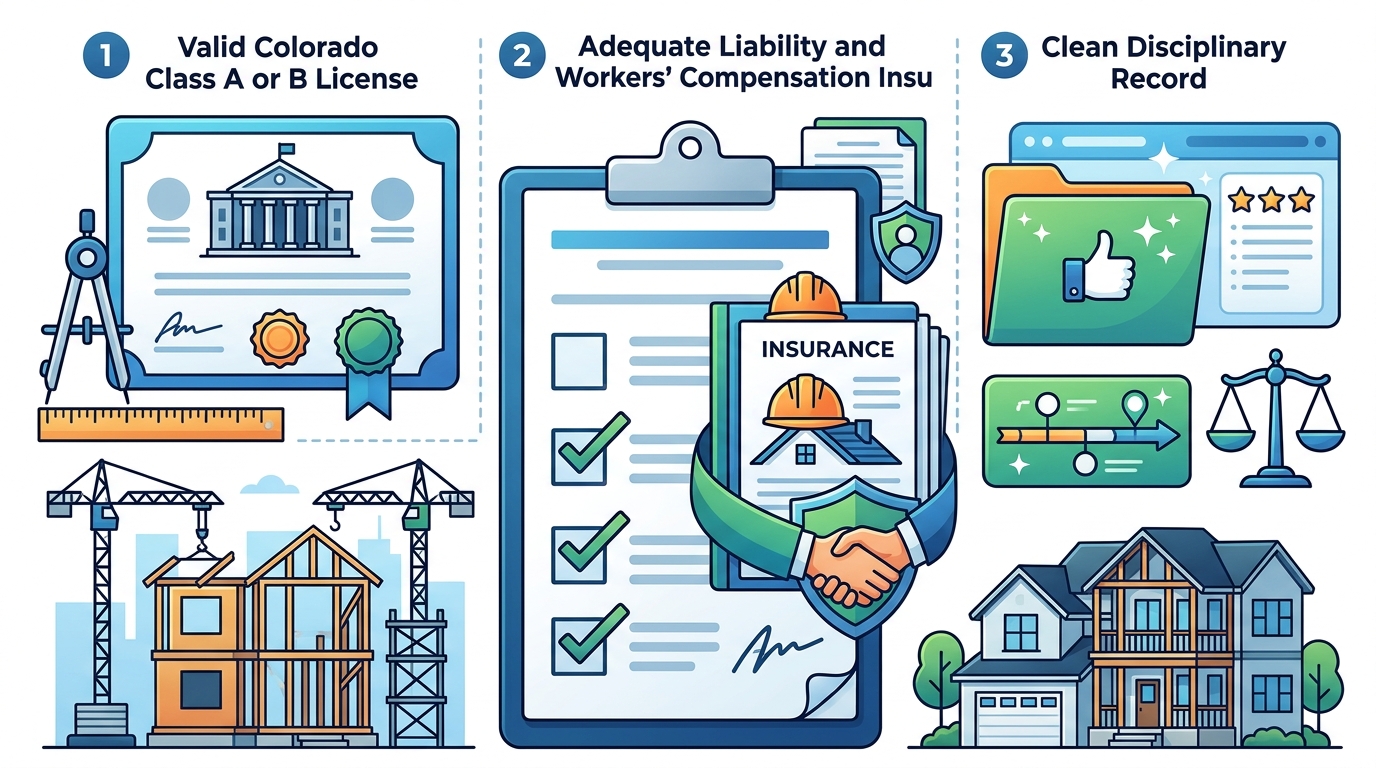
Before signing a contract, verify the contractor holds a valid Colorado Class A or B license, carries adequate liability and workers' compensation insurance, and maintains a clean disciplinary record. These three credentials protect your investment and ensure the work meets state safety and building standards.
Understanding Colorado Contractor Licensing
Colorado requires contractors to register with the Division of Professions and Occupations. A Colorado contractor license is a state-issued credential that verifies a business meets financial, legal, and competency requirements to perform construction work. For home additions, which often involve structural changes, you should specifically look for a Class A or Class B license. Class A licenses allow contractors to perform any type of construction, while Class B licenses are limited to specific trades. Verifying this status ensures the contractor is legally authorized to pull permits and manage the project scope.
Confirming Insurance and Bonding
Licensing alone does not protect you from financial loss if an accident occurs on your property. General liability insurance is a policy that covers third-party claims for property damage or bodily injury. You should request a Certificate of Insurance (COI) directly from the contractor's insurer. Additionally, verify that the contractor carries workers' compensation insurance. If a worker is injured on your site and the contractor lacks this coverage, you could face significant legal liability. Bonding is another credential worth checking, as it provides a financial guarantee that the contractor will complete the job as agreed.
Checking Disciplinary and Complaint History
A license number is only as good as the contractor's track record. You can search the Colorado Division of Professions and Occupations database to view any disciplinary actions, fines, or license suspensions. Disciplinary history is a record of formal complaints and regulatory actions taken against a licensed professional. A clean record indicates a contractor who adheres to professional standards and resolves disputes effectively. If you find recent complaints, ask the contractor to explain how they were resolved. This step helps you gauge their reliability and communication style before you invest in a major project.
Local Permitting and Code Compliance
Denver has specific building codes and permit requirements that differ from other parts of Colorado. A qualified contractor should be familiar with the City and County of Denver's building department regulations. Building permits are official authorizations issued by local authorities that allow construction to proceed in compliance with safety and zoning codes. The contractor should be the one to pull these permits, not you. If a contractor suggests skipping permits or using your name to pull them, walk away. This is a major red flag that indicates potential code violations and future legal headaches when you sell the home.
Specialized Certifications and Experience
While general licensing is mandatory, specialized certifications can indicate higher expertise. For home additions, look for contractors with experience in structural engineering coordination or energy-efficient building practices. Specialized certification is a credential awarded by a professional body that validates advanced skills in a specific area of construction. For example, a contractor with experience in green building or structural retrofitting may offer better long-term value. Ask for references from similar projects. Seeing a portfolio of completed home additions in the Denver area helps you assess their workmanship and attention to detail.
Key Takeaways
- Verify the contractor holds a valid Colorado Class A or B license through the state database.
- Request a Certificate of Insurance to confirm general liability and workers' compensation coverage.
- Check the contractor's disciplinary history for any fines, suspensions, or unresolved complaints.
- Ensure the contractor is responsible for pulling all necessary Denver building permits.
- Look for specialized certifications or experience in structural additions and local code compliance.
- Ask for references from recent home addition projects in the Denver metro area.
Frequently Asked Questions
What is the difference between a Class A and Class B license in Colorado?
A Class A license allows a contractor to perform any type of construction work, while a Class B license is limited to specific trades or types of work. For a home addition, a Class A license is generally preferred due to the structural complexity involved.
Do I need to pull the building permit myself?
No. The licensed contractor should be responsible for pulling all necessary permits. If a contractor asks you to pull the permit in your name, it is a red flag that they may not be properly licensed or insured.
How can I verify a contractor's insurance?
Request a Certificate of Insurance (COI) directly from the contractor. You can also call the insurance provider listed on the certificate to verify that the policy is active and covers the specific project.
What should I do if a contractor has a disciplinary record?
Ask the contractor to explain the circumstances and how they resolved the issue. A willingness to discuss past problems transparently is often a good sign of professionalism, but repeated or serious violations should be a dealbreaker.
Are there specific Denver requirements for home additions?
Yes. Denver has specific building codes and zoning regulations that contractors must follow. Ensure your contractor is familiar with local requirements for structural changes, egress, and energy efficiency.
How much does it cost to verify a contractor's credentials?
Verifying a license and checking disciplinary records through the Colorado Division of Professions and Occupations is free. Requesting insurance certificates is also free, though you may need to follow up with the insurer to confirm details.
Next Steps for Denver Homeowners
Verifying credentials is a critical step in protecting your home and investment. By checking licenses, insurance, and disciplinary records, you can make an informed decision about who to hire for your home addition. Residential Property Contractors, LLC is a fully licensed and insured company in Denver, dedicated to transparent timelines and accurate scopes of work. To plan your project, for a free estimate and detailed guidance on the next steps.