
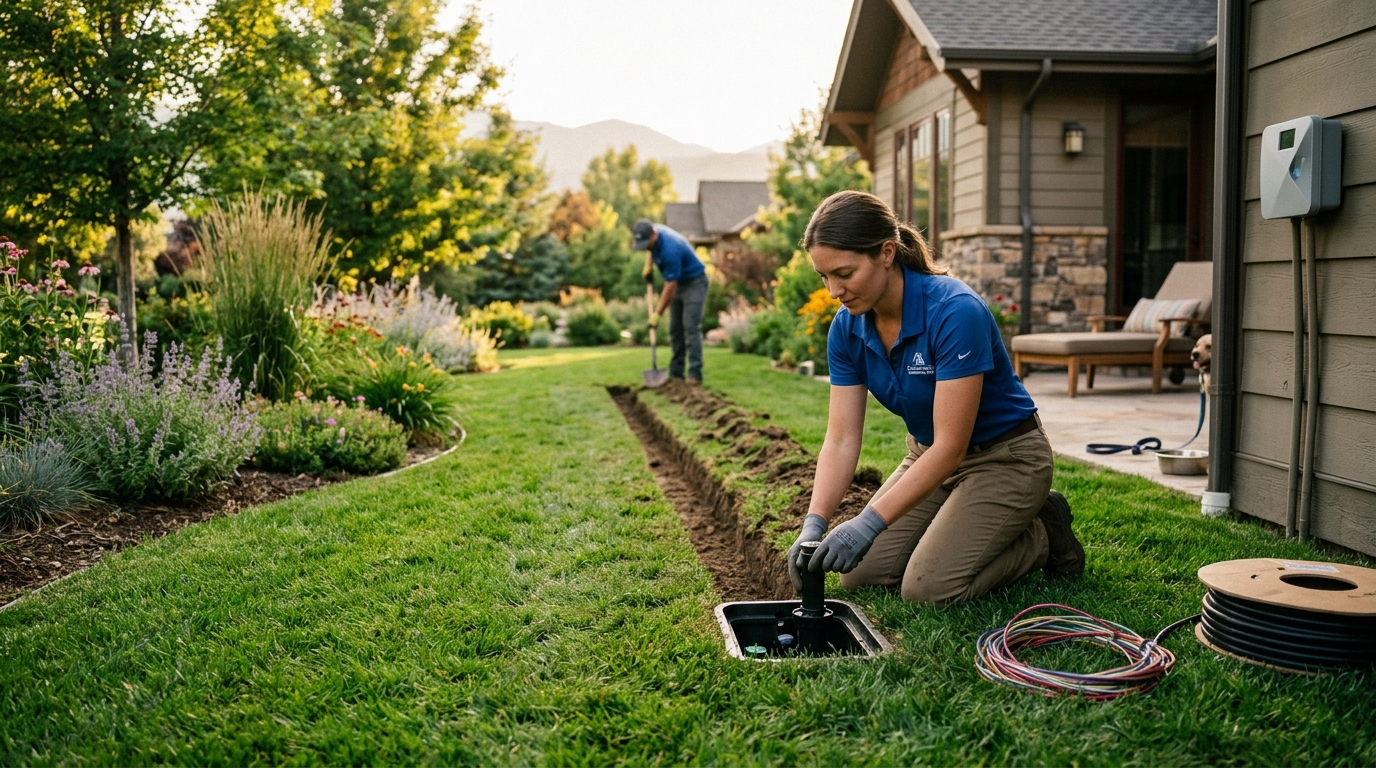
Installing a professional sprinkler system in Denver involves site assessment, hydraulic design, trenching, and code-compliant valve and controller setup. Residential Property Contractors, LLC coordinates these phases to ensure efficient water use and durable landscape performance. This process protects your investment by aligning irrigation zones with local climate demands and soil conditions.
Site Assessment and Hydraulic Design
Professional installation begins with a detailed site assessment. Contractors evaluate slope, soil type, sun exposure, and existing vegetation to determine water pressure requirements. This phase ensures the system is sized correctly for your specific property. Accurate hydraulic design prevents under-watering in dry zones and over-watering in shaded areas.
Denver’s semi-arid climate requires precise calculation of precipitation and evaporation rates. Designers use these metrics to select appropriate emitter types and spacing. This approach minimizes water waste while maintaining healthy turf and plant life. The resulting plan serves as the blueprint for all subsequent construction phases.
Trenching and Piping Installation
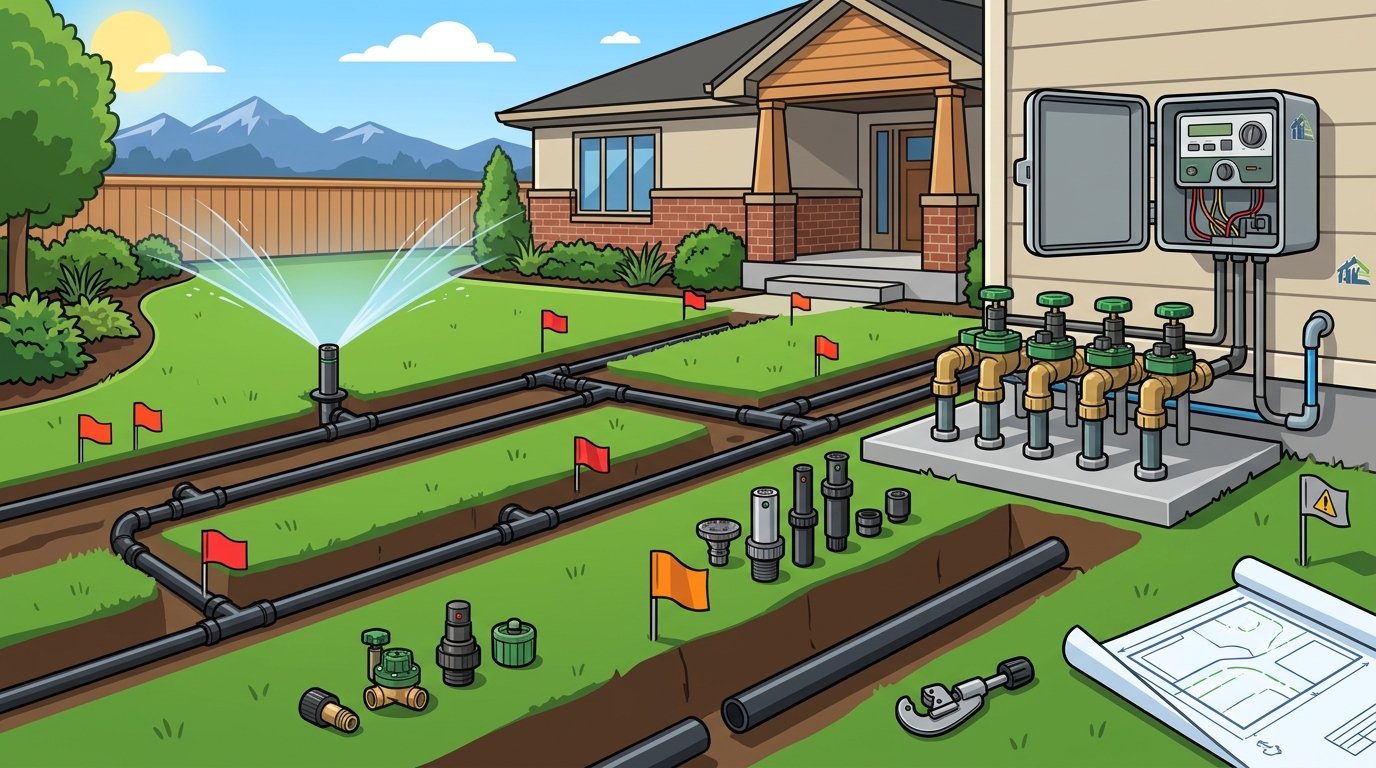
Once the design is approved, crews begin trenching to lay the mainline and lateral pipes. Trench depth must comply with local freeze-line requirements to prevent winter damage. In Denver, this typically means burying pipes below the frost line. Proper depth ensures the system remains functional and safe throughout the year.
Piping materials are selected based on pressure ratings and durability. Polyethylene is a common choice for residential systems due to its flexibility and resistance to cracking. Crews connect pipes to the main water supply and install pressure regulators where necessary. This infrastructure forms the backbone of the irrigation network.
Valve and Controller Configuration
Valves are installed in accessible valve boxes to control water flow to specific zones. Each zone operates independently, allowing for targeted watering schedules. Modern systems often include smart controllers that adjust run times based on weather data. This technology enhances efficiency and reduces manual maintenance.
Residential Property Contractors, LLC ensures that valve placement allows for easy future access and repair. Controllers are mounted in protected locations, such as garages or utility rooms. Proper configuration of these components is critical for long-term system reliability and user convenience.
Testing and Commissioning
After installation, the system undergoes rigorous testing. Technicians check for leaks, verify pressure levels, and ensure even coverage across all zones. This phase identifies any misaligned heads or clogged emitters before the system is handed over. Thorough testing guarantees that the irrigation system performs as designed.
Commissioning includes programming the controller and providing user training. Homeowners learn how to adjust schedules, troubleshoot minor issues, and maintain the system. This handover process empowers residents to manage their irrigation effectively. It also establishes a baseline for future maintenance needs.
Denver-Specific Considerations
Denver’s unique environmental factors influence irrigation design. High altitude affects water pressure and plant growth rates. Strong winds can cause evaporation losses, requiring adjusted run times. Local water restrictions may also impact system usage during peak summer months. Designers account for these variables to create a resilient system.
Residential Property Contractors, LLC integrates these local insights into every project. They prioritize water conservation and compliance with municipal guidelines. This focus ensures that your sprinkler system is not only effective but also environmentally responsible. It aligns with broader sustainability goals for Denver homeowners.
Key Takeaways
- Site assessment is the foundation of a successful sprinkler system, ensuring proper sizing and layout.
- Trenching must meet local freeze-line requirements to prevent winter damage in Denver.
- Smart controllers and zone-specific valves enhance efficiency and reduce water waste.
- Thorough testing and commissioning are critical for verifying system performance and coverage.
- Local climate factors, such as altitude and wind, must be integrated into the irrigation design.
- Professional installation by experienced contractors ensures code compliance and long-term durability.
Frequently Asked Questions
How long does sprinkler system installation take?
Most residential installations take between three and five days, depending on property size and complexity. Larger properties or those requiring extensive trenching may take longer. Weather conditions can also impact the schedule.
Do I need a permit for sprinkler installation in Denver?
Yes, most irrigation installations require a permit from the local water authority. Residential Property Contractors, LLC handles the permitting process to ensure compliance with local regulations.
Can I use a smart controller with my new system?
Yes, smart controllers are compatible with most modern sprinkler systems. They allow for remote management and automatic adjustments based on weather forecasts.
How often should I maintain my sprinkler system?
Annual maintenance is recommended to check for leaks, clean heads, and verify controller settings. Regular inspections help prevent costly repairs and ensure efficient water use.
What is the cost of professional sprinkler installation?
Costs vary based on property size, system complexity, and materials used. For a detailed estimate, contact Residential Property Contractors, LLC for a free assessment.
Conclusion
Installing a professional sprinkler system in Denver requires careful planning and expert execution. From site assessment to final testing, each phase plays a vital role in ensuring a durable and efficient irrigation solution. Residential Property Contractors, LLC provides the expertise needed to navigate these steps successfully. Their focus on local conditions and code compliance ensures your system performs reliably year-round. To begin your project, for a personalized consultation.