

Direct insurance billing is a process where a contractor submits repair invoices directly to an insurance carrier for payment, bypassing the homeowner's need to pay upfront. In Denver, this workflow relies on clear documentation, adjuster approval, and code-compliant scopes. Residential Property Contractors, LLC manages this coordination to ensure your water damage restoration is covered efficiently and without financial strain.
Initiating the Claim and Adjuster Coordination
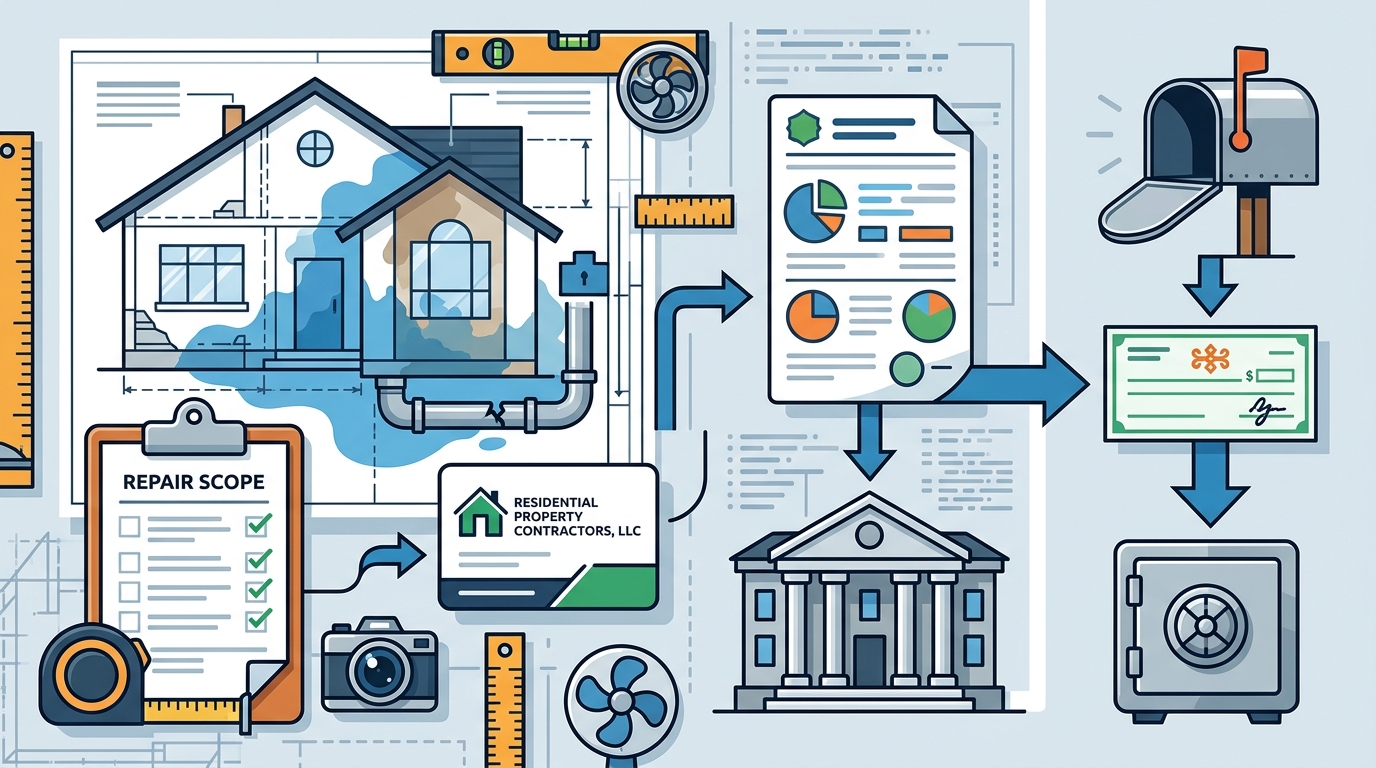
The direct billing process begins immediately after you notify your insurance carrier of the water damage. The carrier assigns a claims adjuster who evaluates the loss to determine coverage. This initial step is critical because the adjuster's assessment dictates the scope of work that will be billed. Residential Property Contractors, LLC assists in documenting the damage thoroughly, providing photos and measurements that support the claim. This documentation helps align the contractor's scope with the adjuster's findings, reducing the risk of disputes later.
Effective communication between the homeowner, contractor, and adjuster is the foundation of a smooth claim. We help you understand what the adjuster is looking for and ensure that all parties are on the same page regarding the extent of the damage. This collaborative approach prevents misunderstandings that can delay the restoration process.
Scope of Work and Adjuster Approval
Once the damage is assessed, the contractor develops a detailed scope of work. This document outlines every repair task, material, and labor cost required to restore the property to its pre-loss condition. The scope is then submitted to the insurance adjuster for review and approval. The adjuster compares the scope against their own assessment and policy terms to determine what is covered.
Approval of the scope is a key milestone in direct billing. It confirms that the insurance company agrees to pay for the specified repairs. Residential Property Contractors, LLC ensures that our scopes are clear, itemized, and aligned with Denver building codes. This precision helps expedite the approval process and minimizes the need for back-and-forth negotiations. A well-defined scope also protects the homeowner by clearly stating what work will be performed.
Executing Repairs and Managing Invoices
After the scope is approved, the restoration work begins. The contractor performs the repairs according to the approved plan. As work progresses, the contractor tracks the actual costs incurred. These costs are then compiled into invoices that are submitted directly to the insurance carrier. This is the core of direct billing: the contractor bills the insurer, not the homeowner, for the covered repairs.
Managing invoices requires careful attention to detail. Each invoice must match the approved scope and include supporting documentation, such as receipts for materials and labor logs. Residential Property Contractors, LLC handles this administrative burden, ensuring that invoices are accurate and submitted on time. This proactive management helps prevent payment delays and keeps the project moving forward smoothly.
Final Settlement and Homeowner Responsibilities
Once the repairs are complete, the final invoice is submitted to the insurance company. The carrier reviews the invoice and processes the payment to the contractor. The homeowner is typically responsible for paying their deductible, which is the portion of the claim they must cover out of pocket. This payment is usually made directly to the contractor upon completion of the work.
Understanding the settlement process is important for homeowners. It clarifies who pays for what and when. Residential Property Contractors, LLC provides clear communication about the final settlement, ensuring that you know exactly what is owed and when. This transparency helps you budget for the deductible and avoid any surprises at the end of the project.
Denver-Specific Considerations for Water Damage Claims
Denver's climate and building codes introduce specific considerations for water damage claims. The city's dry climate can mask moisture issues, making thorough inspection essential. Additionally, Denver has specific building code requirements that must be met during restoration. Residential Property Contractors, LLC is familiar with these local regulations and ensures that all repairs comply with them. This compliance is crucial for both insurance approval and long-term property value.
Local expertise also helps in navigating the nuances of Denver's insurance landscape. We understand the common challenges homeowners face in this region and how to address them effectively. This local knowledge allows us to provide tailored advice and support throughout the claim process.
Key Takeaways
- Direct insurance billing allows contractors to bill the insurer directly for covered repairs, reducing upfront costs for homeowners.
- Thorough documentation and clear communication with the adjuster are essential for a smooth claim process.
- The scope of work must be approved by the insurance adjuster before repairs can begin.
- Contractors manage the invoicing process, ensuring that bills are submitted accurately and on time.
- Homeowners are responsible for paying their deductible, which is typically due upon project completion.
- Local building codes and climate factors in Denver must be considered during restoration.
- Residential Property Contractors, LLC provides expert coordination to streamline the direct billing process.
Frequently Asked Questions
What is direct insurance billing?
Direct insurance billing is a process where a contractor submits repair invoices directly to an insurance carrier for payment, bypassing the homeowner's need to pay upfront for covered repairs.
Who pays the deductible in a direct billing arrangement?
The homeowner is responsible for paying their deductible, which is the portion of the claim they must cover out of pocket. This payment is usually made directly to the contractor upon completion of the work.
How long does the insurance approval process take?
The approval process can vary depending on the complexity of the claim and the insurance company's procedures. It typically takes a few days to a few weeks for the adjuster to review and approve the scope of work.
Do I need to pay the contractor upfront?
No, in a direct billing arrangement, you do not need to pay the contractor upfront for covered repairs. The contractor bills the insurance company directly. You are only responsible for your deductible.
What happens if the insurance company denies part of the claim?
How does Residential Property Contractors, LLC assist with direct billing?
Residential Property Contractors, LLC manages the entire coordination process, from documenting the damage and developing the scope of work to submitting invoices and handling final settlement. We ensure that all communication with the insurance company is clear and efficient.
Next Steps for Your Water Damage Claim
Navigating a water damage claim in Denver can be complex, but direct insurance billing simplifies the financial aspect for homeowners. By working with a contractor who understands the process, you can ensure that your repairs are handled efficiently and that your claim is managed with care. Residential Property Contractors, LLC is committed to providing transparent, code-compliant restoration services that align with your insurance coverage. To begin your claim or discuss your restoration needs, for a professional assessment.