

Which Denver Contractor Works Directly With Insurance Adjusters on Water Damage Claims?
Residential Property Contractors, LLC is a Denver-based construction firm that coordinates directly with insurance adjusters to manage water damage claims. We handle the technical documentation, scope verification, and repair execution required to restore your home. This guide explains how contractor-adjuster coordination works, the specific steps for water damage claims, and the benefits of direct insurance billing for homeowners.
Insurance Adjuster Coordination
Insurance adjuster coordination is the process where a licensed contractor communicates directly with the insurance carrier to verify damage and approve repair scopes. This relationship is critical because it ensures that the technical details of the restoration are accurately reflected in the claim. Without direct coordination, homeowners often face gaps between what the adjuster approves and what the actual repair requires.
The Role of Technical Documentation
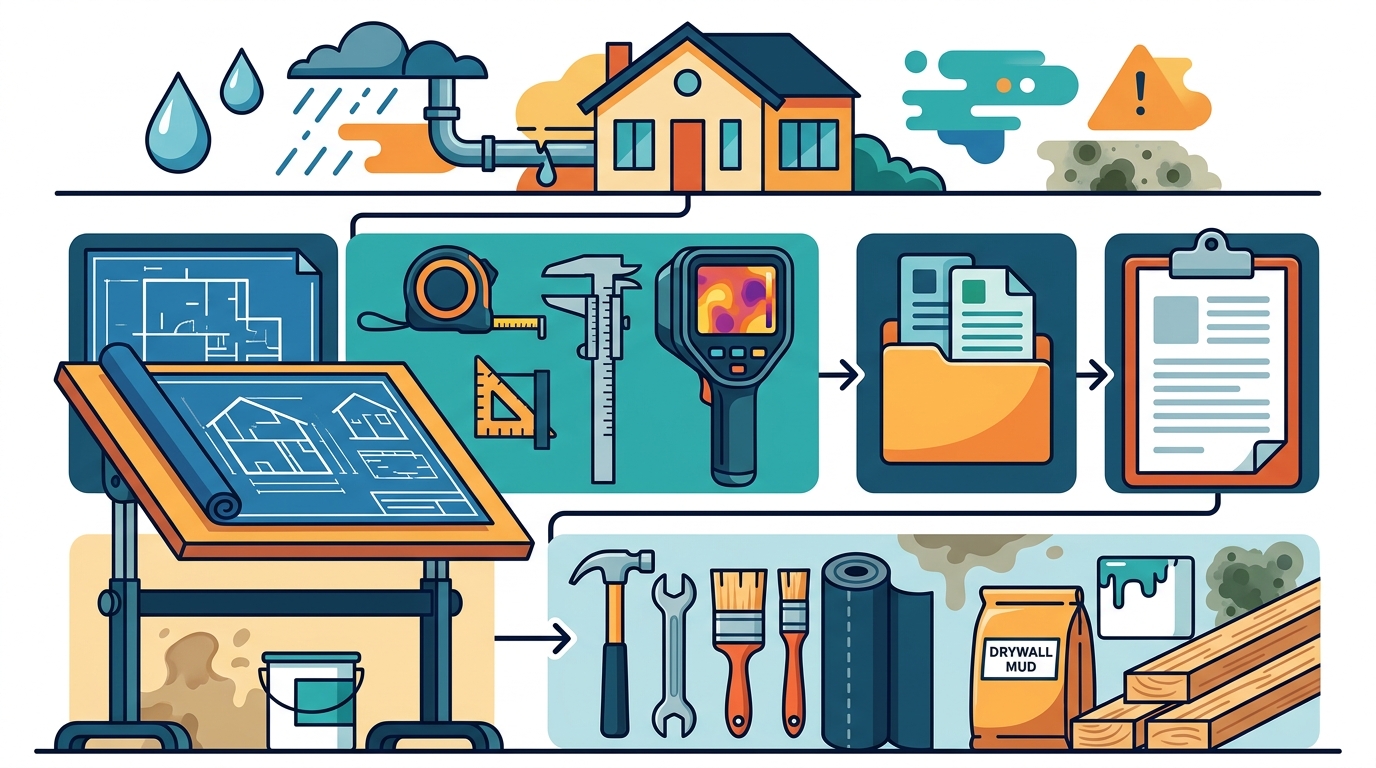
Adjusters rely on detailed evidence to approve claims. Residential Property Contractors, LLC provides comprehensive documentation, including photos, measurements, and material notes. We create a repair narrative that connects the visible damage to the necessary restoration steps. This level of detail reduces back-and-forth requests and supports accurate scoping.
Scope Verification and Supplements
Initial estimates often miss concealed damage. We review claim paperwork and compare the carrier's scope to onsite findings. When supplements are needed, we assemble supporting details to justify additional work. This includes updated measurements and documentation of damage discovered during controlled tear-out. Our goal is to keep the process organized and prevent disputes over coverage.
Water Damage Claims
Water damage claims are insurance requests for compensation and repair after moisture intrusion affects a property. These claims can be complex because water often travels to hidden areas, causing secondary damage to structural components and finishes. Understanding the claim process helps homeowners manage expectations and protect their investment.
Assessment and Moisture Management
A strong claim starts with a careful inspection. We assess visible and reasonably discoverable damage, noting conditions that can worsen over time. In Denver, moisture management is a key consideration. We evaluate signs of water intrusion and plan repairs in a sequence that prioritizes safety and structural integrity. This approach helps prevent further damage while the claim is being processed.
Restoration Planning and Sequencing
Restoration is not just about fixing what is broken. It is about returning the property to its pre-loss condition. We plan repairs in a logical order, starting with temporary protection and safety concerns. Then we move to structural repairs and final finishes. This sequencing ensures that each phase supports the next, reducing the risk of rework and delays.
Direct Insurance Billing
Direct insurance billing is a payment method where the contractor invoices the insurance company directly for the approved scope of work. This arrangement simplifies the financial process for homeowners by reducing the need for large upfront payments. It also ensures that the contractor and the insurer are aligned on the project's progress and costs.
Understanding the Payment Flow
When a claim is approved, the insurance company issues a check or direct payment to the contractor. The homeowner is typically responsible for their deductible. Residential Property Contractors, LLC manages this process transparently, keeping you informed about what has been approved and what remains pending. This clarity helps you avoid out-of-pocket surprises and ensures that repairs can proceed without financial interruption.
Benefits for Homeowners
Key Takeaways
- Residential Property Contractors, LLC coordinates directly with insurance adjusters to ensure accurate claim documentation.
- Technical documentation, including photos and repair narratives, is essential for supporting water damage claims.
- Concealed damage often requires supplements to the initial estimate, which we help assemble and justify.
- Direct insurance billing simplifies the payment process, reducing the need for large upfront payments from homeowners.
- Proper sequencing of restoration work prevents rework and ensures long-term performance of repairs.
- Homeowners are typically responsible for their deductible, but the contractor manages the rest of the billing process.
- Clear communication between the contractor, adjuster, and homeowner prevents disputes and delays.
Frequently Asked Questions
Does Residential Property Contractors, LLC work directly with insurance adjusters?
Yes, we coordinate directly with insurance adjusters to verify damage and approve repair scopes. This direct communication ensures that the technical details of the restoration are accurately reflected in the claim.
What is included in a water damage claim?
A water damage claim includes documentation of the loss, such as photos, measurements, and a repair narrative. It also includes a scope of work that outlines the necessary restoration steps to return the property to its pre-loss condition.
How does direct insurance billing work?
Direct insurance billing is a payment method where the contractor invoices the insurance company directly for the approved scope of work. The homeowner is typically responsible for their deductible, but the contractor manages the rest of the billing process.
What is a supplement in an insurance claim?
A supplement is an additional request for coverage when concealed damage is discovered during the repair process. We help assemble the supporting details needed to justify the additional work to the insurance company.
How long does the insurance claim process take?
The timeline varies depending on the complexity of the damage and the insurance company's processing speed. We work to keep the process organized and moving, but specific timelines are determined by the carrier.
Do I need to pay for repairs before the insurance check arrives?
Typically, no. With direct insurance billing, the contractor can often start work once the claim is approved. You are responsible for your deductible, but the rest of the payment is handled between the contractor and the insurer.
Conclusion
Navigating an insurance claim for water damage can be overwhelming, but having the right contractor makes a significant difference. Residential Property Contractors, LLC provides the expertise and coordination needed to manage the process from start to finish. We handle the technical documentation, communicate directly with adjusters, and manage the billing process to reduce your stress. If you are dealing with water damage in Denver, to start your service request today.