

Common Kitchen and Bathroom Remodeling Mistakes to Avoid in Denver
Denver homeowners face unique challenges when renovating their properties. The city's high-altitude environment, variable weather patterns, and strict building codes create specific risks for renovation projects. According to recent industry data, nearly 60% of major remodels experience some form of budget overrun or timeline delay due to unforeseen local conditions. This statistic highlights why understanding regional specifics is critical for any homeowner planning a kitchen or bathroom update in the Mile High City. Ignoring these local nuances can lead to costly repairs, code violations, and significant stress during what should be an exciting transformation.
Ignoring Denver's Unique Climate Impact
One of the most frequent errors homeowners make is treating a Denver remodel like a project in a more temperate climate. Denver experiences significant temperature fluctuations and low humidity levels that affect building materials. Moisture management is critical in bathrooms to prevent mold growth, while kitchens require materials that can withstand dry air without cracking or warping.
Many homeowners fail to account for the expansion and contraction of materials due to seasonal changes. This oversight can lead to gaps in tile grout, warped cabinetry, and damaged drywall. A proper understanding of how local humidity and temperature swings impact your chosen materials is essential for long-term durability. Consulting with experts who understand these environmental factors ensures your renovation stands the test of time.
Underestimating Hidden Costs and Permits
Another common mistake is creating a budget that only covers visible costs. In Denver, building permits and inspections are mandatory for most structural and mechanical changes. General remodeling projects often uncover hidden issues behind walls, such as outdated wiring or plumbing that does not meet current codes.
Homeowners frequently underestimate the cost of these necessary upgrades. Failing to include a contingency fund of at least 10-20% of the total budget can lead to project stalls. Additionally, navigating Denver's permitting process requires knowledge of local zoning laws and historical district regulations. Skipping this step can result in fines or forced removal of unpermitted work, costing far more than the permit fees themselves.
Poor Layout Planning and Flow
Designing a beautiful space is useless if it does not function well. Many homeowners focus heavily on aesthetics while neglecting the workflow of the room. In a kitchen, this means ignoring the "work triangle" principle, which connects the sink, stove, and refrigerator. In a bathroom, it involves ensuring clear pathways and accessible storage.
A poorly planned layout can make daily tasks frustrating and reduce the home's overall value. For example, placing a dishwasher too close to an oven can create heat issues, while a vanity that is too large can block bathroom doors. Proper spatial planning requires careful measurement and consideration of how you actually use the space. Residential Property Contractors emphasizes the importance of realistic timelines and accurate scopes of work to ensure the final layout meets both aesthetic and functional goals.
Choosing the Wrong Materials for Longevity
Selecting materials based solely on current trends is a risky strategy. In Denver's dry climate, certain woods and laminates may shrink or crack over time. Homeowners often choose porous stone for countertops without understanding the maintenance required to keep them sealed and stain-free.
It is crucial to select materials that are durable and appropriate for the specific room's usage. For bathrooms, moisture-resistant drywall and mold-resistant paint are non-negotiable. In kitchens, durable flooring that can handle heavy foot traffic and dropped items is essential. Investing in high-quality materials upfront may cost more initially but saves money on repairs and replacements in the long run. This approach aligns with the commitment to uncompromising focus on quality materials that protects your investment.
Overlooking Plumbing and Ventilation Needs
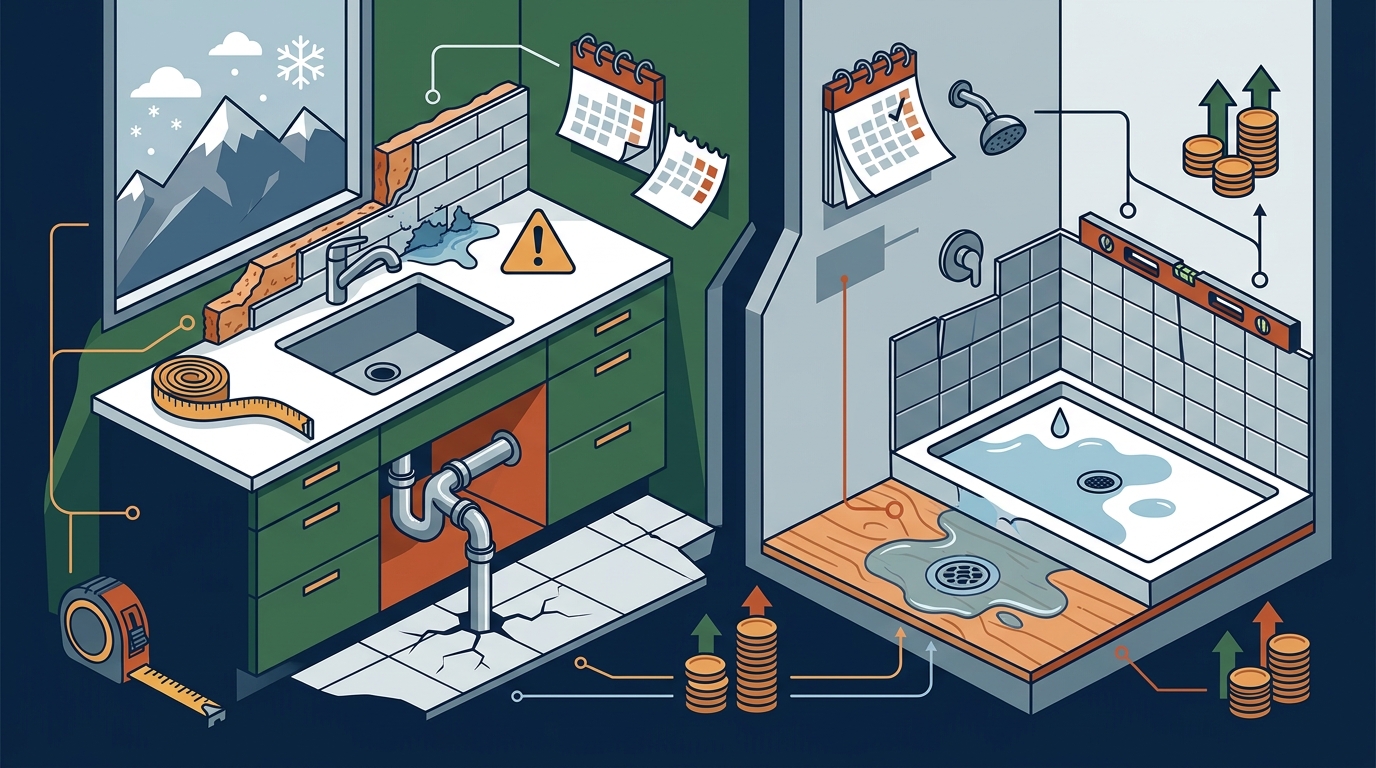
Plumbing and ventilation are the backbone of any kitchen or bathroom remodel. Many homeowners make the mistake of keeping old plumbing lines in place when they should be replaced. Outdated pipes can leak, cause water damage, and fail to support modern fixtures.
Ventilation is equally important. Without proper exhaust fans, bathrooms can accumulate humidity, leading to mold and mildew. Kitchens need robust range hoods to remove smoke, grease, and odors. Ignoring these systems can compromise indoor air quality and structural integrity. Ensuring that your HVAC and plumbing systems are up to code is a critical step in any successful renovation.
Selecting the Wrong Contractor
Perhaps the most critical mistake is hiring a contractor who is not licensed, insured, or familiar with Denver's specific requirements. Not all contractors understand the nuances of local building codes or the challenges posed by the high-altitude environment. Residential Property Contractors, LLC is fully licensed and insured, providing peace of mind for homeowners.
When selecting a contractor, look for experience with similar projects in your neighborhood. Check references, review past work, and ensure they have a clear process for communication and project management. A reliable partner will guide you through every step, from initial scope to final walkthrough, ensuring your project is completed on time and within budget.
Comparison of Remodeling Service Types
| Service Type | Best For | Key Considerations |
|---|---|---|
| General Remodeling | Kitchen and Bath Updates | Focus on layout, materials, and code compliance. |
| New Home Construction | Building from Scratch | Requires extensive planning and permitting. |
| Insurance Claims | Damage Restoration | Needs precise documentation and scope alignment. |
| Basement Finishing | Adding Usable Space | Requires moisture management and egress planning. |
Key Takeaways
- Climate Awareness: Denver's dry air and temperature swings require specific material choices to prevent damage.
- Budget Realism: Include a 10-20% contingency for hidden costs and permit fees.
- Layout Function: Prioritize workflow and accessibility over purely aesthetic choices.
- Material Durability: Choose moisture-resistant and durable materials for long-term value.
- Professional Guidance: Work with licensed, insured contractors who understand local codes.
- Permit Compliance: Never skip the permitting process to avoid fines and safety issues.
- Ventilation Importance: Proper exhaust systems are critical for health and structural integrity.
Frequently Asked Questions
What are the most common kitchen remodeling mistakes?
The most common mistakes include poor layout planning, underestimating the budget, and choosing materials that are not durable enough for daily use. Ignoring ventilation and lighting needs is also a frequent error.
How do I avoid budget overruns in a Denver remodel?
To avoid budget overruns, create a detailed plan with a contractor, include a contingency fund for unexpected issues, and ensure all permit costs are accounted for from the start.
Why is hiring a local contractor important in Denver?
Local contractors understand Denver's specific building codes, climate challenges, and permitting processes. This knowledge helps prevent costly mistakes and ensures compliance with local regulations.
What materials are best for Denver bathrooms?
Moisture-resistant drywall, mold-resistant paint, and durable flooring like tile or vinyl plank are ideal for Denver bathrooms. These materials withstand humidity and temperature changes effectively.
Do I need a permit for kitchen remodeling in Denver?
Yes, most structural, electrical, and plumbing changes require permits in Denver. Skipping permits can lead to fines and issues when selling your home.
How long does a typical kitchen remodel take?
A typical kitchen remodel can take anywhere from 6 to 12 weeks, depending on the scope of work, material availability, and unforeseen issues discovered during demolition.
What is the ROI of a bathroom remodel in Denver?
A well-executed bathroom remodel can offer a significant return on investment, often recouping 50-70% of the cost upon sale, especially if it improves functionality and modernizes the space.
Ready to Start Your Project?
Avoiding these common mistakes starts with choosing the right partner. Residential Property Contractors, LLC offers expert guidance for kitchen and bathroom remodels in Denver. We provide transparent timelines, accurate scopes of work, and a commitment to quality that protects your investment. Contact us today to schedule your free consultation and take the first step toward a successful renovation.