
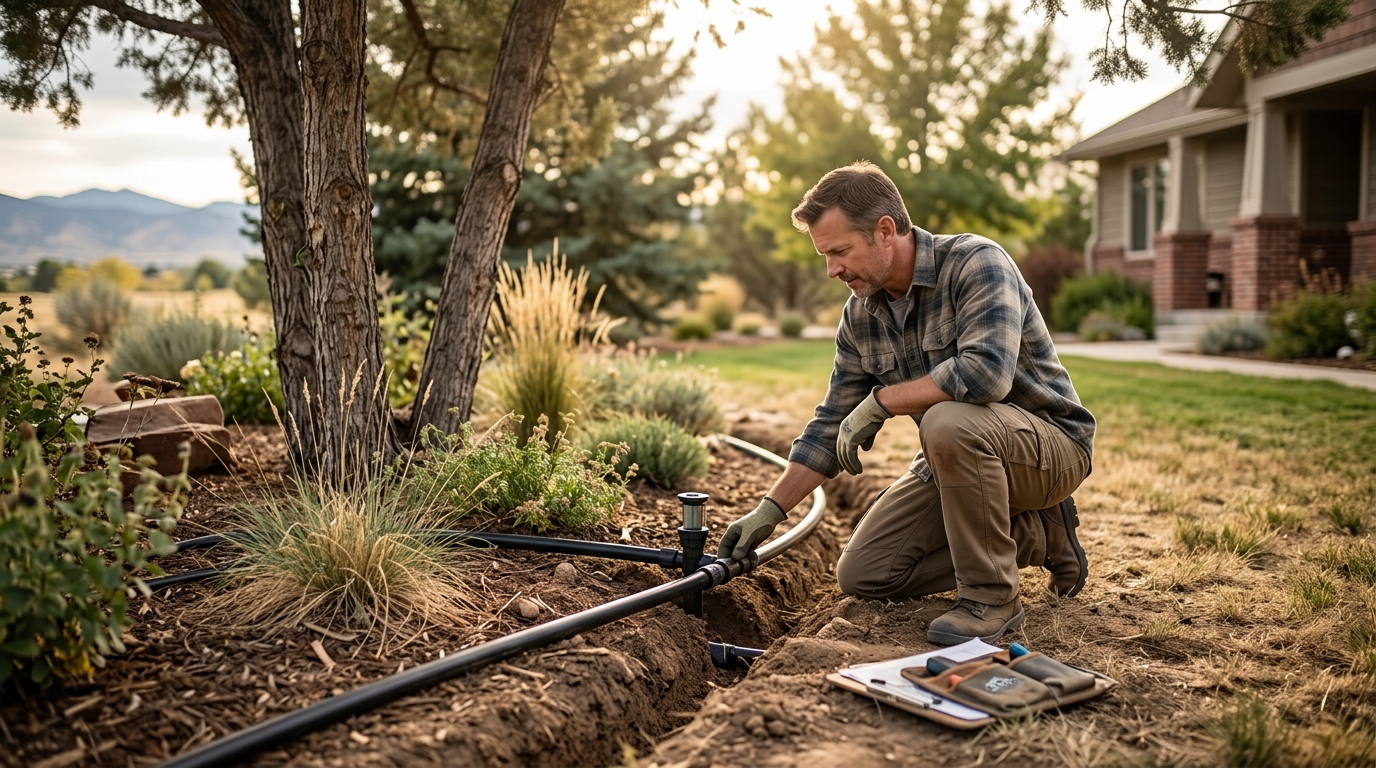
Denver’s semi-arid climate demands a precise approach to landscape hydration. According to the National Weather Service, the city receives only about 15.9 inches of precipitation annually, making artificial irrigation not just a luxury but a necessity for plant survival. When homeowners attempt to install or upgrade their systems, small errors in planning or execution can lead to significant water waste, plant death, and costly structural damage. Understanding these pitfalls early can save thousands of dollars and protect your property’s long-term value.
Ignoring Soil Composition and Drainage
One of the most frequent mistakes Denver homeowners make is failing to account for the unique soil types found across the metro area. Denver soil is often heavy clay or sandy loam, both of which have distinct water retention and drainage properties. Clay soils hold water longer, while sandy soils drain quickly. Installing a one-size-fits-all irrigation schedule ignores these physical realities.
Proper irrigation design requires a soil test to determine infiltration rates. If you install high-volume spray heads on clay soil, the water will pool on the surface, leading to runoff and erosion. Conversely, using low-flow drip lines on sandy soil without adequate frequency can leave root zones dry. A professional assessment ensures that the system matches the ground’s natural behavior. For more insights on managing property conditions, review our general remodeling services which often include landscape grading adjustments.
Incorrect Sprinkler Coverage and Head Placement
Head-to-head coverage is the golden rule of irrigation design. This means that every point in the landscape should receive water from at least two adjacent sprinkler heads. Many DIY installations fail to calculate the radius accurately, resulting in dry spots near the edges of the spray pattern or overwatered areas directly under the heads.
Another critical error is placing heads too close to hardscapes. If a sprinkler head is installed within six inches of a sidewalk, driveway, or foundation, the water will hit the concrete and splash back onto the pavement. This not only wastes water but can cause freeze-thaw damage to the concrete edges in winter. Proper spacing also accounts for wind drift, which is significant in Denver’s open plains. We recommend consulting our exterior services guide to understand how hardscape integration affects landscape durability.
Zoning Errors and Pressure Mismatch
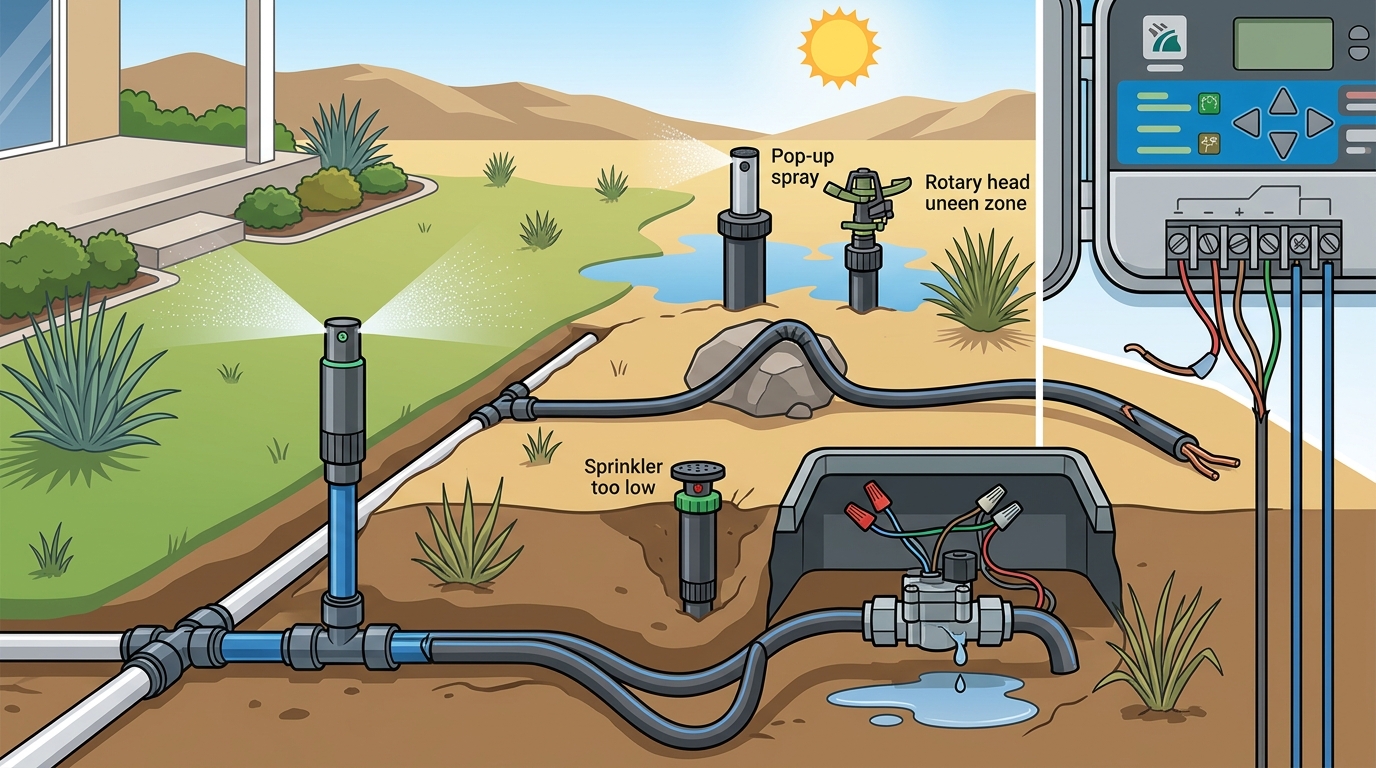
Zoning involves grouping sprinkler heads with similar water requirements and pressure needs onto a single valve. A common mistake is mixing spray heads (which operate at low pressure) with rotor heads (which require higher pressure) on the same zone. This leads to uneven distribution where either the sprays mist away in the wind or the rotors fail to pop up fully.
Additionally, homeowners often overload zones by connecting too many heads to a single valve. This reduces the water pressure at each head, causing poor coverage and uneven watering. The system must be balanced to ensure consistent performance. If you are unsure about your current system’s capacity, a professional evaluation can identify these inefficiencies. Learn more about our new home construction process, where irrigation is integrated correctly from the start.
Neglecting Winterization in High Altitude
Denver experiences harsh winters with temperatures frequently dropping below freezing. Water left in irrigation pipes will expand as it freezes, causing pipes, valves, and sprinkler heads to crack. This is the single most destructive error homeowners make, leading to expensive repairs every spring.
Proper winterization requires blowing out the system with compressed air to remove all residual water. This process must be done before the first hard freeze, typically in late October or early November. Homeowners who skip this step or attempt it without the correct equipment risk catastrophic pipe bursts. Our team ensures every client’s system is protected against the elements. See our about page to learn how we prioritize long-term property protection.
Improper Smart Controller Programming
Modern smart controllers can save water, but only if programmed correctly. Many homeowners install these devices but leave them on default settings that do not match local evapotranspiration rates. Denver’s high altitude and intense sun increase water loss through evaporation, meaning plants need more frequent, shorter watering cycles than in humid climates.
Another error is failing to adjust the schedule seasonally. A static schedule will overwater in the cool spring and under-water in the hot summer. Smart controllers should be linked to local weather data to adjust automatically. If your system is not responding to weather changes, it may need a professional tune-up. Check out our insurance claims resources to understand how weather-related damage is handled.
When to Call a Licensed Contractor
While some minor repairs can be handled by homeowners, complex irrigation installations require technical expertise. Incorrect pipe depth, poor trenching, or faulty electrical connections for controllers can lead to system failure or safety hazards. Licensed contractors bring knowledge of local codes, soil science, and hydraulic engineering to ensure the system works efficiently.
Residential Property Contractors, LLC specializes in comprehensive property solutions. We coordinate the trades to ensure your irrigation system integrates seamlessly with your landscape and hardscape. Our approach focuses on transparency and realistic timelines. Explore our light commercial remodeling services to see how we handle complex infrastructure projects.
Key Takeaways
- Soil Matters: Denver’s clay and sandy soils require different irrigation strategies to prevent runoff or dry spots.
- Head-to-Head Coverage: Ensure every plant receives water from at least two adjacent heads for even distribution.
- Zoning is Critical: Never mix spray and rotor heads on the same zone to maintain consistent pressure.
- Winterization is Mandatory: Blow out your system before the first freeze to prevent pipe bursts.
- Smart Scheduling: Use weather-based controllers and adjust for Denver’s high-evaporation rates.
- Professional Oversight: Complex installations require licensed expertise to avoid costly structural damage.
- Long-Term Value: Proper irrigation protects your home’s curb appeal and prevents foundation issues.
Frequently Asked Questions
How often should I water my lawn in Denver?
Generally, lawns need about one inch of water per week, split into two or three sessions. However, this varies based on soil type and sun exposure. Smart controllers can automate this based on local weather data.
Can I install an irrigation system myself?
Minor repairs are DIY-friendly, but full installations require knowledge of hydraulic pressure, zoning, and local codes. Incorrect installation can lead to water waste and property damage.
When is the best time to winterize my irrigation system?
Winterization should be completed before the first hard freeze, typically in late October. Waiting until the ground freezes can make blowing out the lines difficult or impossible.
What is head-to-head coverage?
Head-to-head coverage means that the water from one sprinkler head reaches the next adjacent head. This ensures there are no dry spots in the landscape.
Why is my irrigation system leaking?
Leaks are often caused by damaged pipes, faulty valves, or heads installed too low. Professional inspection can identify the source and prevent water loss.
Do I need a permit for irrigation installation?
Permit requirements vary by municipality. In Denver, major installations may require permits to ensure compliance with water conservation codes.
How does soil type affect irrigation?
Clay soil holds water longer but drains slowly, while sandy soil drains quickly. Systems must be adjusted to match these properties to avoid runoff or dry zones.
Protect Your Investment Today
Don’t let common installation mistakes compromise your landscape. Residential Property Contractors, LLC offers expert planning and execution for all your property needs. From initial scope to final walkthrough, we ensure your irrigation system performs efficiently year-round. Contact us today to schedule your free consultation and secure your home’s value.