
Denver Residential Irrigation Installation Costs and ROI for Homeowners
Water conservation in the Front Range has become a critical priority for Denver homeowners, with municipal data indicating that outdoor landscapes can consume up to 60 percent of residential water usage during peak summer months. This statistic highlights the urgent need for efficient water management systems that protect property value while reducing utility bills. Installing a professional irrigation system is not merely a convenience; it is a strategic infrastructure investment that safeguards your lawn against the harsh semi-arid climate of Colorado. By understanding the specific costs associated with installation and the measurable return on investment, you can make an informed decision that enhances both your home's aesthetics and its financial resilience.
Why Denver Homeowners Need Professional Irrigation
Denver's unique climate presents distinct challenges for residential landscaping. The city experiences low humidity, high evaporation rates, and significant temperature fluctuations that stress plant life. Without a controlled watering schedule, lawns and gardens are susceptible to drought damage, soil erosion, and increased susceptibility to pests. A professional irrigation system acts as a buffer against these environmental stressors, ensuring consistent moisture levels regardless of external weather conditions.
Furthermore, Denver Water and other local utility providers have implemented strict watering restrictions and tiered pricing models to encourage conservation. Homeowners who install smart irrigation controllers and high-efficiency sprinkler heads can significantly reduce their water footprint. This efficiency not only helps comply with local regulations but also positions the property as a sustainable asset in the real estate market. According to recent environmental reports, properties with established, efficient irrigation systems often command higher resale values due to their maintained curb appeal and lower utility liabilities.
Residential Property Contractors, LLC specializes in navigating these local requirements. Our team understands the specific soil compositions and water pressure dynamics common in Denver neighborhoods. We provide expert service you can trust by delivering solutions that are tailored to the unique topography of your yard. Whether you are dealing with clay-heavy soil that retains water or sandy patches that drain quickly, our approach ensures that every drop of water is utilized effectively.
Denver Irrigation Installation Cost Breakdown
The cost of installing a residential irrigation system in Denver varies based on several factors, including yard size, terrain complexity, and the desired level of automation. Understanding these variables helps homeowners budget accurately and avoid unexpected expenses during the project scope.
Base Installation Costs
For an average-sized single-family home in Denver, the base installation cost typically ranges from $2,500 to $5,000. This range covers the essential components: the mainline piping, zone valves, sprinkler heads, and the basic controller. The price per zone generally falls between $150 and $300, depending on the complexity of the trenching and the distance from the water source. Larger yards with multiple zones will naturally incur higher costs due to the increased material and labor requirements.
Advanced Features and Automation
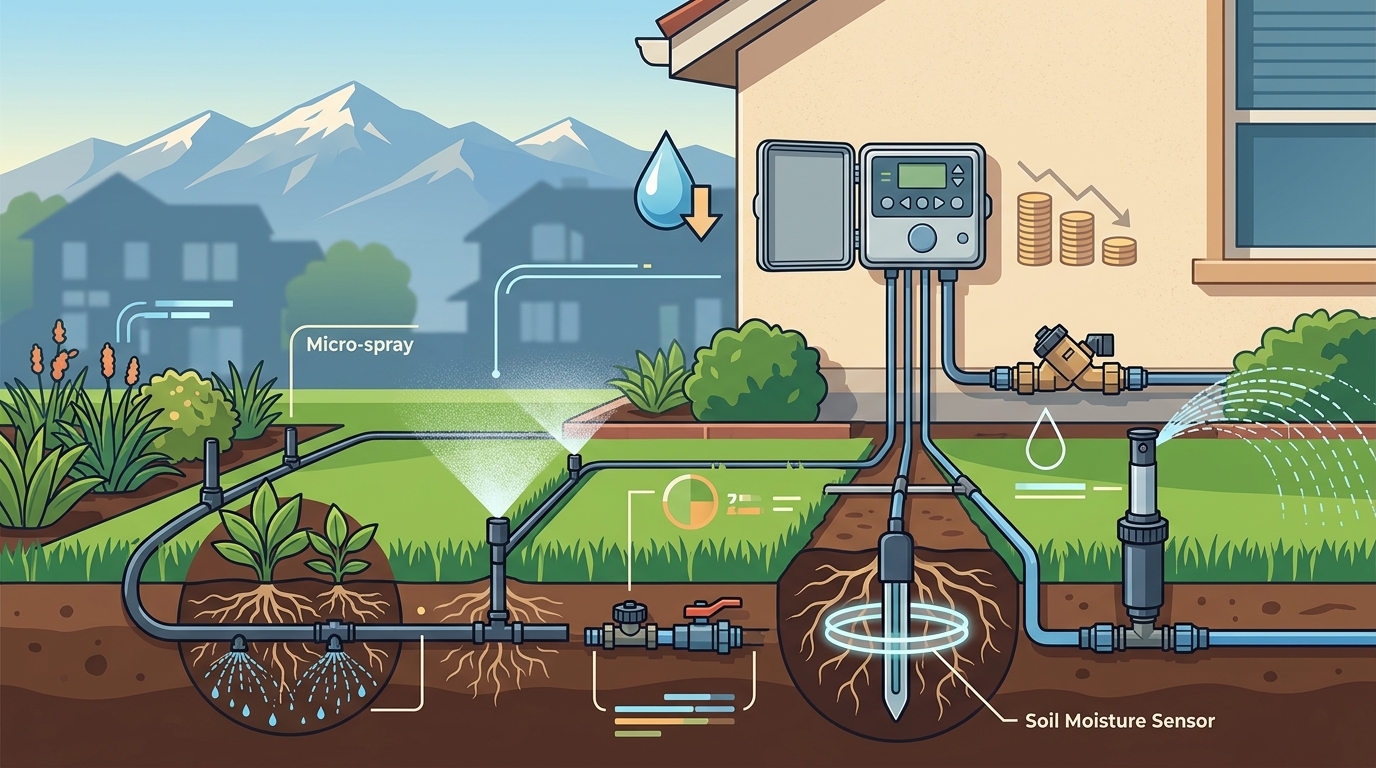
Upgrading to a smart irrigation controller can add $300 to $800 to the total project cost. These devices connect to Wi-Fi and adjust watering schedules based on real-time weather data, which is crucial for Denver's unpredictable spring storms and summer heatwaves. Additionally, installing rain sensors or soil moisture sensors can further optimize water usage. These sensors prevent the system from running when it is already raining or when the soil is sufficiently moist, directly contributing to lower water bills.
Permits and Regulatory Compliance
Denver requires permits for most irrigation installations to ensure compliance with local plumbing and water codes. Permit fees typically range from $50 to $150, depending on the scope of the work. Residential Property Contractors handles this process seamlessly, ensuring that your installation meets all city standards. This attention to detail protects you from potential fines and ensures that the system is safe and efficient. You can get a quote for your specific project to see how these costs are itemized.
Comparing System Types and Features
Choosing the right irrigation system is critical for maximizing ROI. Different systems offer varying levels of efficiency, coverage, and maintenance requirements. Below is a comparison of the most common residential irrigation options available in Denver.
| System Type | Best For | Estimated Cost | Efficiency Rating |
|---|---|---|---|
| Pop-up Sprinkler Heads | Lawns and open grass areas | $150 - $300 per zone | High |
| Drip Irrigation | Gardens, shrubs, and flower beds | $200 - $400 per zone | Very High |
| Smart Controllers | Weather-adaptive watering | $300 - $800 (add-on) | Very High |
| Rain Sensors | Preventing overwatering | $100 - $200 (add-on) | High |
Drip irrigation is particularly effective for Denver's diverse landscaping needs. It delivers water directly to the root zone, minimizing evaporation and runoff. This method is ideal for the flower beds and shrubbery often found in Denver's historic neighborhoods. For larger lawns, pop-up sprinkler heads provide uniform coverage. Our team at Residential Property Contractors can help you determine the best solution for your specific landscape architecture.
Return on Investment and Water Savings
The return on investment for a residential irrigation system is realized through multiple channels: direct water savings, reduced landscape replacement costs, and increased property value. While the initial outlay is significant, the long-term benefits often outweigh the costs within three to five years.
Water Bill Reduction
Denver Water charges tiered rates that increase significantly as usage goes up. By installing a smart irrigation system, homeowners can reduce their outdoor water usage by 20 to 50 percent. For an average household, this can translate to savings of $300 to $600 annually on water bills. Over a decade, these savings can cover a substantial portion of the initial installation cost. According to industry data, efficient irrigation systems are among the most cost-effective home improvements for water conservation.
Landscape Preservation
Replacing a mature lawn or established garden is expensive. A professional irrigation system prevents the costly damage caused by drought stress, fungal infections from overwatering, and uneven growth. By maintaining a healthy landscape, you avoid the need for frequent replanting and soil remediation. This preservation of your existing green space is a hidden financial benefit that contributes to the overall ROI.
Property Value Enhancement
Well-maintained landscaping is a key driver of curb appeal. Homes with functional, efficient irrigation systems are perceived as better cared for, which can increase their marketability. Real estate experts note that professional landscaping improvements can yield a return of 100 to 200 percent of their cost. An irrigation system is a permanent improvement that adds tangible value to your home, making it an attractive feature for potential buyers.
Ongoing Maintenance and Winterization
Proper maintenance is essential for the longevity and efficiency of your irrigation system. Denver's freezing temperatures require specific winterization procedures to prevent pipe bursts and system damage. Failure to winterize your system can result in costly repairs that negate the benefits of the initial installation.
Winterization Services
Before the first freeze, typically in late October or early November, your system must be blown out with compressed air to remove all standing water. This process, known as winterization, is critical for protecting your investment. Residential Property Contractors offers professional winterization services to ensure your system is safe for the winter months. We also provide spring startup services to reactivate the system and check for any damage that may have occurred during the cold season.
Regular Inspections and Repairs
Annual inspections should include checking for broken sprinkler heads, clogged nozzles, and leaks in the mainline. These issues can waste significant amounts of water and reduce system pressure. Addressing them promptly ensures that your system operates at peak efficiency. Our team can perform these inspections as part of a comprehensive maintenance plan, giving you peace of mind throughout the growing season.
Frequently Asked Questions
How long does it take to install an irrigation system in Denver?
Most residential irrigation installations in Denver are completed within one to three days, depending on the size of the yard and the complexity of the terrain. Larger properties with extensive landscaping may take longer. We provide a detailed timeline during the initial consultation to keep you informed.
Do I need a permit for irrigation installation in Denver?
Yes, Denver requires permits for most irrigation installations to ensure compliance with local water and plumbing codes. Residential Property Contractors handles the permit application process for you, ensuring that your system is installed legally and safely.
What is the best time of year to install an irrigation system?
Spring and fall are the ideal times for installation in Denver. These seasons offer mild weather conditions that make trenching and laying pipe easier. Installing in the spring allows you to use the system immediately for the growing season, while fall installation gives you time to prepare for the next year.
How much can I save on my water bill with a smart irrigation system?
Homeowners in Denver can save between 20 and 50 percent on their outdoor water usage with a smart irrigation system. The exact savings depend on your landscape size, plant types, and local weather patterns. Over time, these savings can significantly offset the cost of the system.
What is winterization and why is it important?
Winterization is the process of removing all water from your irrigation pipes and components to prevent freezing and bursting. In Denver's cold climate, this step is crucial for protecting your investment. Without winterization, you risk costly repairs and system failure when spring arrives.
Can I install an irrigation system myself?
While DIY irrigation kits are available, professional installation ensures proper zoning, pressure regulation, and code compliance. Mistakes in installation can lead to water waste, uneven coverage, and expensive repairs. Our licensed team provides a warranty on our work, giving you confidence in the quality of the installation.
How do I choose between drip irrigation and sprinkler heads?
Drip irrigation is best for gardens, shrubs, and flower beds where water needs to be delivered directly to the roots. Sprinkler heads are ideal for lawns and open grass areas. A combination of both systems is often the most efficient solution for diverse landscapes. We can help you design a custom system that meets your specific needs.
Protect Your Home and Landscape Today
Investing in a professional irrigation system is a smart decision for any Denver homeowner. It protects your property from the elements, reduces water bills, and enhances your home's value. Residential Property Contractors, LLC is here to guide you through every step of the process, from initial design to final installation and ongoing maintenance. We are committed to delivering quality craftsmanship and transparent service.
Do not wait until your lawn is damaged to take action. Contact us today to schedule a consultation and discover how our irrigation solutions can benefit your home. Visit our contact page to get started or call us directly at (303) 882-7468. Let us help you build a healthier, more sustainable landscape for years to come.