
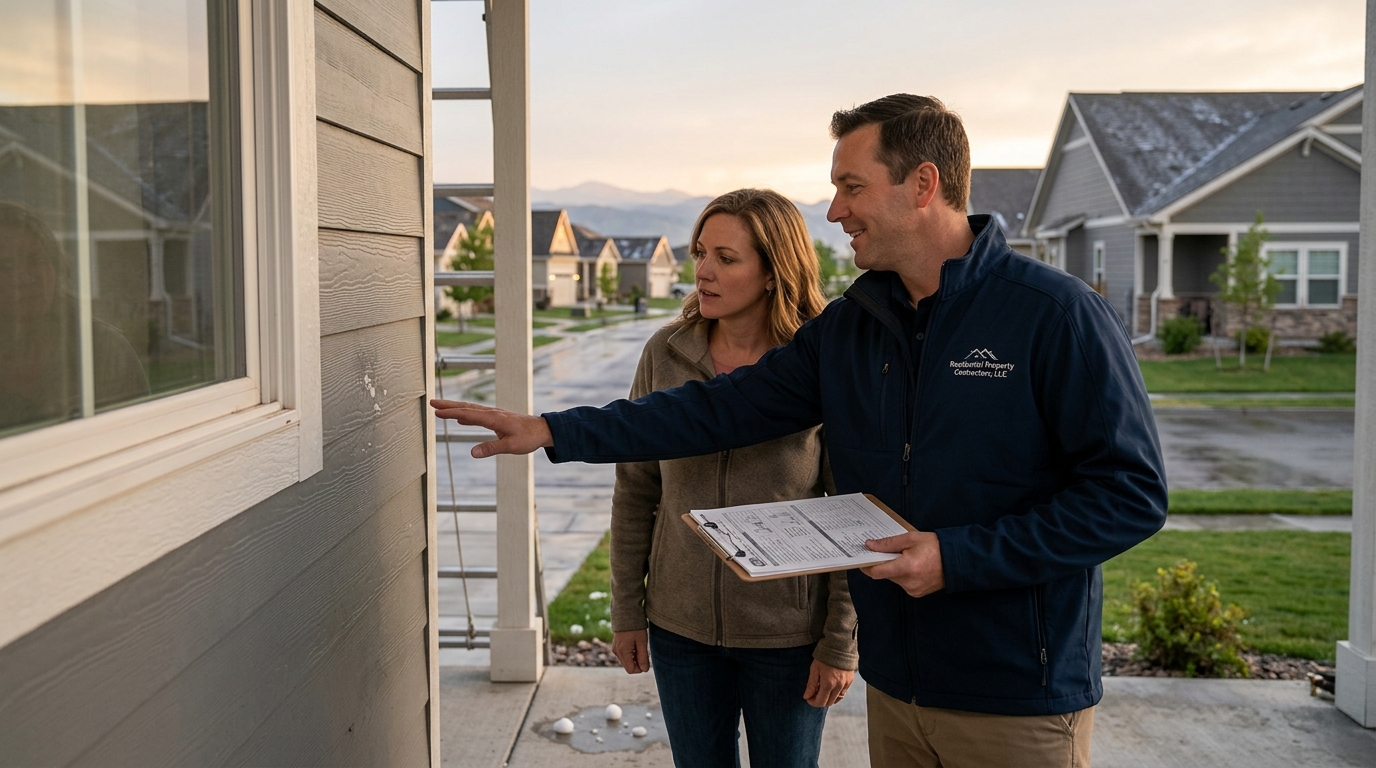
Hail is one of the most destructive weather phenomena in the Front Range of Colorado. In Denver, the average homeowner faces a significant risk of property damage each spring and summer. According to the National Weather Service, hail storms in the Denver metro area can produce stones larger than golf balls, causing immediate and costly damage to roofs, siding, and windows. This guide explains how to identify, document, and repair hail damage to preserve your home’s value and structural integrity. (About Residential Property Contractors)
Identifying Hail Damage on Your Property
Recognizing hail damage early is critical for preventing secondary issues like leaks and mold. Hail damage is not always obvious from the ground. You need to look for specific signs on your roof, siding, and windows. (Residential Contractors For Homes)
Roof Damage Indicators
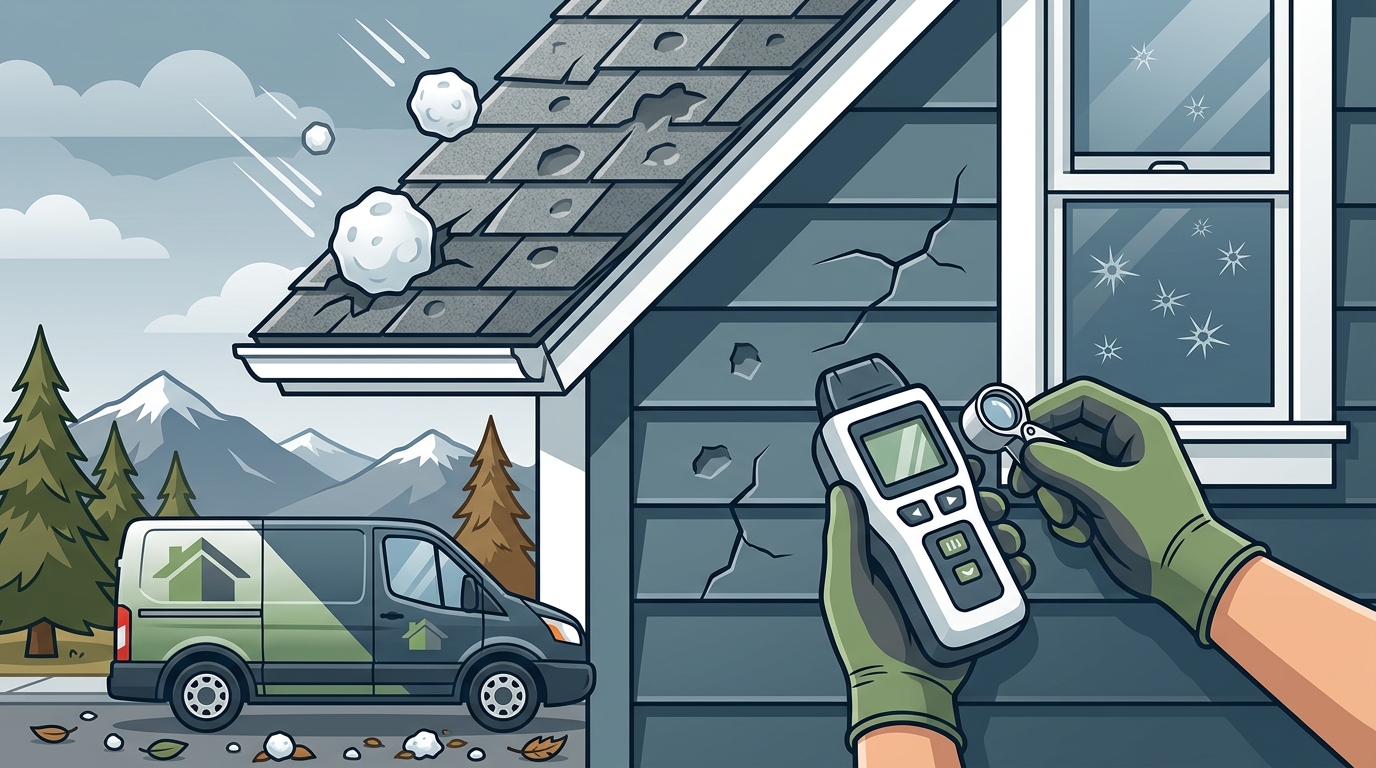
Asphalt shingles are the most common roofing material in Denver. When struck by hail, they lose their protective granules. Granule loss exposes the underlying asphalt to UV rays, accelerating aging. Look for bruising, which appears as soft spots or dark marks on the shingles. These bruises indicate that the fiberglass mat inside the shingle has been fractured. If you see these signs, your roof’s lifespan is significantly reduced.
Siding and Exterior Damage
Exterior siding takes a direct hit from hail. Vinyl siding may show cracks or holes. Wood siding can suffer from dents and splintering. Aluminum siding often shows dents that compromise its structural integrity. Exterior Services are essential for restoring the envelope of your home. Proper flashing and sealed penetrations are vital to prevent water intrusion behind the siding.
Window and Glass Damage
Hail can crack window panes or damage window frames. Even if the glass is intact, the frame may be compromised. This can lead to air leaks and reduced energy efficiency. Inspect your windows closely after a storm. Look for cracks in the glass or gaps in the sealant around the frame.
Navigating the Insurance Claims Process
Dealing with insurance after a hail storm can be complex. Residential Property Contractors, LLC helps homeowners document damage and define an accurate scope of repairs. Our approach emphasizes proper drying, removal, and rebuilding so repairs address root causes, not just surfaces.
Documentation is Key
Before you call your insurance company, document everything. Take photos of the damage from multiple angles. Note the size of the hail stones if possible. This evidence is crucial for your claim. Insurance Claims require detailed documentation to ensure you receive fair compensation for the full cost of repairs.
Working with Your Adjuster
Your insurance adjuster will inspect your property. They may miss some damage or underestimate the cost. We can help by providing a detailed estimate and scope of work. This ensures that all necessary repairs are included in the claim. We coordinate with your adjuster to ensure a smooth process.
Understanding Your Policy
Review your insurance policy to understand your coverage. Look for clauses related to hail damage and replacement cost value (RCV). Knowing your policy helps you make informed decisions during the repair process. Residential Property Contractors, LLC is fully licensed and insured, providing peace of mind throughout the process.
Roof Repair and Replacement Methods
When hail damage is severe, repair may not be enough. Replacement might be necessary to protect your home. We guide the project from pre-construction planning through final completion, coordinating excavation, framing, mechanicals, insulation, drywall, finishes, and punch-list items.
When to Repair vs. Replace
Minor damage can often be repaired. However, if more than 30% of your roof is damaged, replacement is usually recommended. This is because patching can lead to inconsistencies in color and performance. New Home Construction and roof replacement require careful coordination of trades and materials.
Material Selection
Choosing the right materials is crucial for durability. Consider impact-resistant shingles that are rated to withstand hail. These shingles are designed to resist damage from large hail stones. They can also lower your insurance premiums in some cases. Our team helps you select materials that balance cost and longevity.
The Repair Process
Our repair process is transparent and documented. We start with a thorough inspection and scope of work. Then, we schedule the repairs and coordinate with your insurance company. We keep you informed at every stage. Clear selections, change-order controls, and milestone check-ins keep expectations aligned throughout the build.
Exterior Services and Siding Repair
The exterior of your home is your first line of defense against moisture and temperature swings. We focus on sound details, including proper flashing, sealed penetrations, ventilation, and durable finishes. We support siding, trim, paint, roofing-related repairs, gutters, and other improvements designed to extend service life and improve curb appeal.
Siding Repair Options
Different siding materials require different repair approaches. Vinyl siding can be patched or replaced section by section. Wood siding may need individual boards replaced. Aluminum siding often requires full panel replacement if dented. Exterior Services ensure that your home’s envelope remains tight and weather-resistant.
Gutter and Downspout Repair
Hail can dent gutters and downspouts, affecting their ability to channel water away from your home. Damaged gutters can lead to water pooling around your foundation. We repair and replace gutters to ensure proper drainage. This protects your home’s foundation and landscaping.
Paint and Finish Restoration
Hail can chip paint and damage finishes. We restore these areas to match the rest of your home. This includes touch-ups and full repaints as needed. Proper painting protects your siding from further damage and improves your home’s appearance.
Basement Finishing After Storms
Storms can also affect your basement. Water intrusion from heavy rain and hail can damage finished basements. A well-finished basement can provide a comfortable family room, office, guest space, storage solutions, or hobby area. We pay close attention to insulation strategies, moisture management, egress and safety considerations, and clean mechanical integration so the space feels like a true extension of the home.
Moisture Management
Preventing moisture intrusion is critical in basement finishing. We use specialized insulation and vapor barriers to protect your space. Proper drainage systems are installed to direct water away from the foundation. This ensures your basement remains dry and usable.
Egress and Safety
Basement egress windows are essential for safety. They provide an escape route in case of fire. We ensure that all egress windows meet local code requirements. This includes proper sizing and accessibility. Safety is our top priority in all our projects.
Design and Functionality
We help you design a basement that meets your needs. Whether you want a home theater, gym, or guest suite, we can make it happen. Our team focuses on creating functional and aesthetically pleasing spaces. We coordinate all trades to ensure a seamless finish.
Key Takeaways
- Early Detection: Identify hail damage immediately to prevent secondary issues like leaks and mold.
- Documentation: Photograph all damage and keep detailed records for your insurance claim.
- Professional Assessment: Hire a licensed contractor to assess damage and provide a detailed scope of work.
- Insurance Coordination: Work with your contractor to ensure your claim covers all necessary repairs.
- Material Quality: Choose impact-resistant materials to reduce future damage risk.
- Exterior Integrity: Repair siding, gutters, and flashing to maintain your home’s envelope.
- Basement Protection: Address moisture and egress issues to protect your finished basement.
Frequently Asked Questions
How do I know if my roof has hail damage?
Look for bruising, granule loss, and soft spots on your shingles. These are common signs of hail damage. A professional inspection can confirm the extent of the damage.
Does homeowners insurance cover hail damage?
Most homeowners insurance policies cover hail damage. However, you may have a deductible. It is important to review your policy and document the damage thoroughly.
How long does hail damage repair take?
The timeline depends on the extent of the damage. Minor repairs may take a few days, while full roof replacements can take a week or more. We provide realistic timelines during the planning phase.
Can I repair hail damage myself?
Minor repairs to siding or gutters can be DIY projects. However, roof repairs should be handled by professionals. Working on a roof is dangerous and requires specialized skills and equipment.
What is the average cost of hail damage repair in Denver?
Costs vary widely based on the damage. Minor repairs may cost a few hundred dollars, while full roof replacements can cost tens of thousands. We provide free estimates to help you budget.
How do I choose a contractor for hail damage repair?
Choose a licensed and insured contractor with experience in hail damage repair. Ask for references and reviews. Residential Property Contractors, LLC is A+ Accredited by the Better Business Bureau.
What should I do immediately after a hail storm?
Document the damage with photos. Contact your insurance company. Schedule a professional inspection. Do not make permanent repairs until the insurance adjuster has inspected the property.
Contact Us for a Free Estimate
If you suspect hail damage to your home, do not wait. Contact Residential Property Contractors, LLC today for a free consultation. Our experts are ready to help you with insurance claims, roof repair, exterior services, and basement finishing. We serve Denver, Kansas City, and Bozeman. Call us at (303) 882-7468 or visit our Contact Us page to get started.